Powering Up Next Year’s Success with Panorama’s End-of-Year Data Workflows

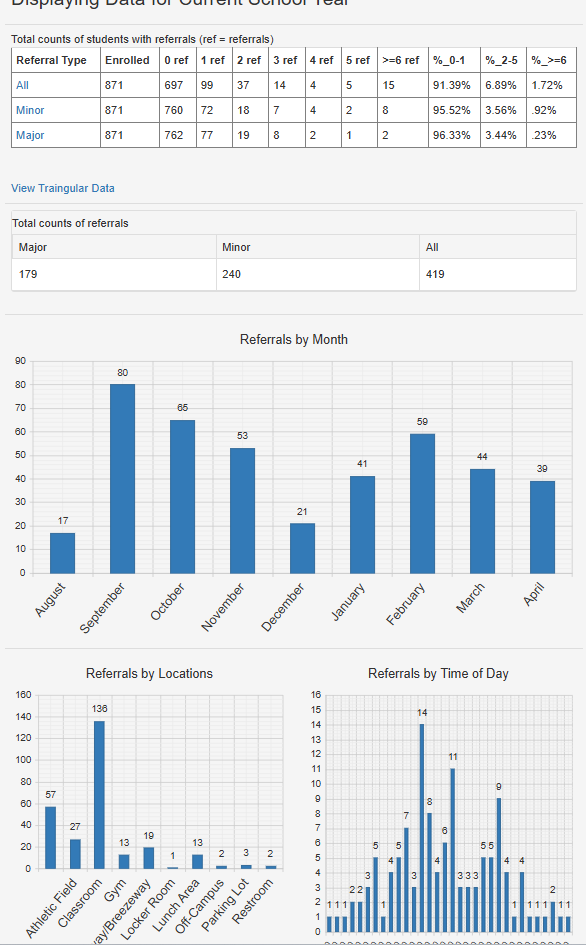
Panorama powers automated student insights and risk-flagging, providing the foundational infrastructure districts need when refining end-of-year data processes to ensure seamless system interoperability and AI-powered workflows.
Graduation Checklist Finalized: How NYCPS’ Data Portal Aligns Course Credits for Seamless Summer School and Scheduling
So What
Aligning final course performance and credit data to graduation requirements can help districts identify ongoing student support needs before the next school year begins.
Context Setting
Before implementing the New Visions Data Portal, New York City Public Schools (NYCPS) faced challenges consistently reviewing end-of-year graduation readiness data across schools and systems. Educators often had to manually piece together information about course completion, credits, and Regents performance to determine which students still required support or were at risk of falling off track.
Innovation/Partnership
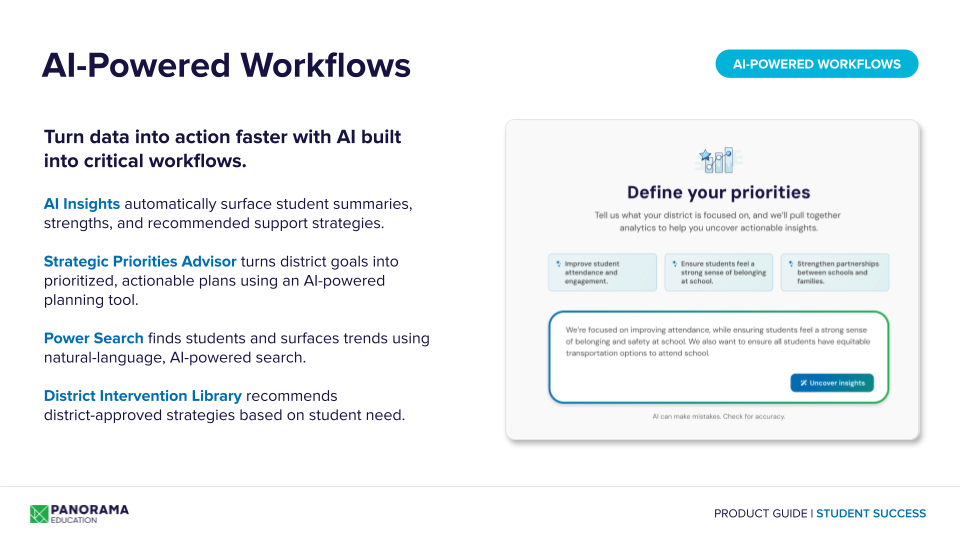
To improve end-of-year planning and transition processes, NYCPS partnered with New Visions for Public Schools to centralize final course completion, credit accumulation, attendance, and Regents data within the New Visions Data Portal. Educators and student success teams used the system to review graduation progress, identify students needing additional support, and prepare for summer school and next-year intervention planning. This created clearer visibility into student readiness and transition needs before the school year closed.
Impact
By aligning final student outcome data to graduation requirements, NYCPS improved teams’ ability to identify ongoing student support needs earlier and coordinate summer and transition planning more effectively. This helped reduce the likelihood of students quietly falling off track between school years.
Strategy Fit
Consider this strategy if your district has:
- Difficulty identifying students who still need support before the next school year
- Graduation readiness data spread across disconnected systems
- Limited visibility into final course and credit completion trends
- Challenges coordinating summer or transition planning
- Inconsistent end-of-year student review processes
Roadmap
- Identify which final student outcome indicators should guide transition planning
- Align course completion and credit data to graduation requirements
- Centralize end-of-year student outcome reporting where possible
- Configure systems to flag students needing continued support
- Create workflows for summer school and transition planning
- Establish recurring end-of-year student review processes across teams
Learn more about this district’s approach in the District-Led Innovation Showcase report.
Maintaining Continuity of Student Support Beyond the School Year: D11 Uses Centralized Student Data to Support Summer and Transition Planning
So What
Maintaining centralized student data systems through the end of the school year can help districts create smoother transitions and ensure student support continues beyond the academic calendar.
Context Setting
Before strengthening end-of-year transition processes, Colorado Springs School District 11 (D11) faced challenges ensuring student support information remained accessible and coordinated across summer planning and transitions into the next school year. Important information about attendance, academics, behavior, and student well-being was not always consistently carried forward between teams or support processes.
Innovation/Partnership
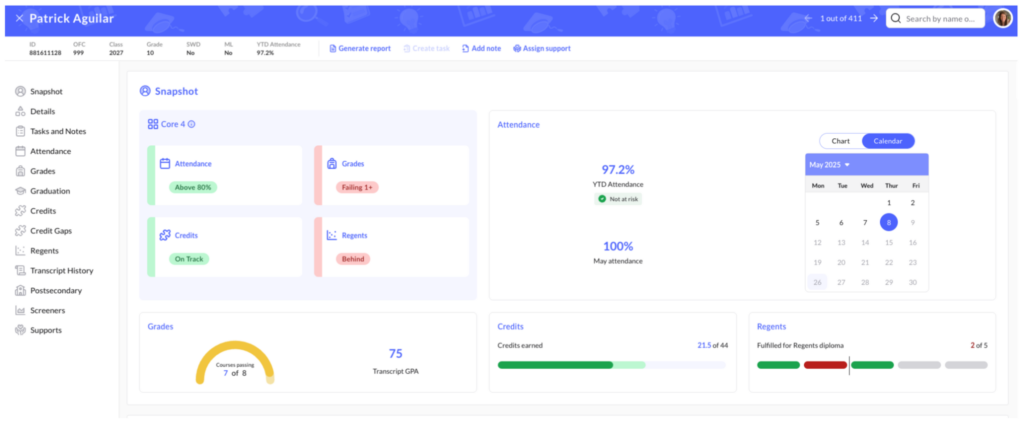
To improve continuity of support, D11 used Panorama Student Success as a centralized system for maintaining and reviewing student data at the end of the school year. Educators and student success teams used shared dashboards and student profiles to review final student outcomes, identify students requiring continued support, and coordinate summer or transition planning across teams. This created a more connected and proactive approach to supporting students between school years.
Impact
By maintaining centralized access to student success information, D11 improved coordination across teams and strengthened continuity of support beyond the school year. This helped ensure that students needing ongoing support remained visible during transitions into summer programs and the following school year.
Strategy Fit
Consider this strategy if your district has:
- Difficulty maintaining continuity of student support between school years
- Student information spread across disconnected systems
- Limited visibility into students requiring summer or transition support
- Challenges coordinating end-of-year planning across teams
- Inconsistent student handoff processes
Roadmap
- Identify which student indicators should inform transition planning
- Centralize student success information into shared systems or dashboards
- Create workflows for reviewing final student outcomes
- Identify students requiring continued or summer support
- Coordinate transition planning across educators and support staff
- Establish processes for carrying student success information into the next school year
Explore more about this district’s strategy in the District-Led Innovation Showcase report.
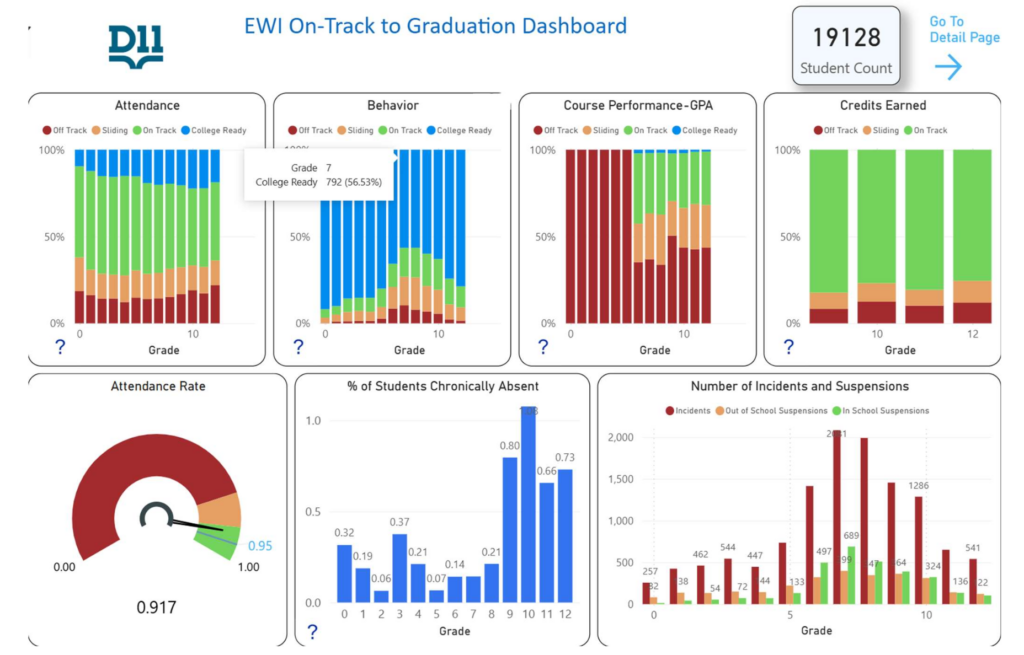
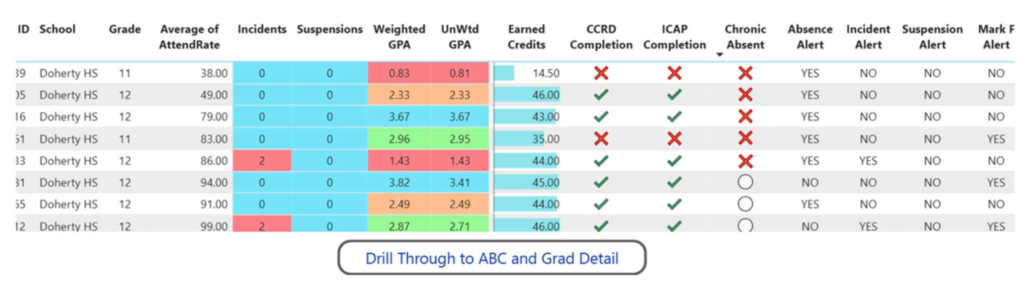
Using End-of-Year Data to Prevent Students From Falling Through the Cracks: Lynwood Reviews On-Track Data to Plan Continued Support
So What
Reviewing on-track data before the school year ends can help districts proactively identify students needing continued support and improve transition planning across school years.
Context Setting
Before refining its end-of-year review processes, Lynwood Unified School District (LUSD) faced challenges consistently identifying which students still required support before the summer and the next academic year. Student success teams often lacked structured processes for reviewing final student progress trends and coordinating continued support planning across schools and departments.
Innovation/Partnership
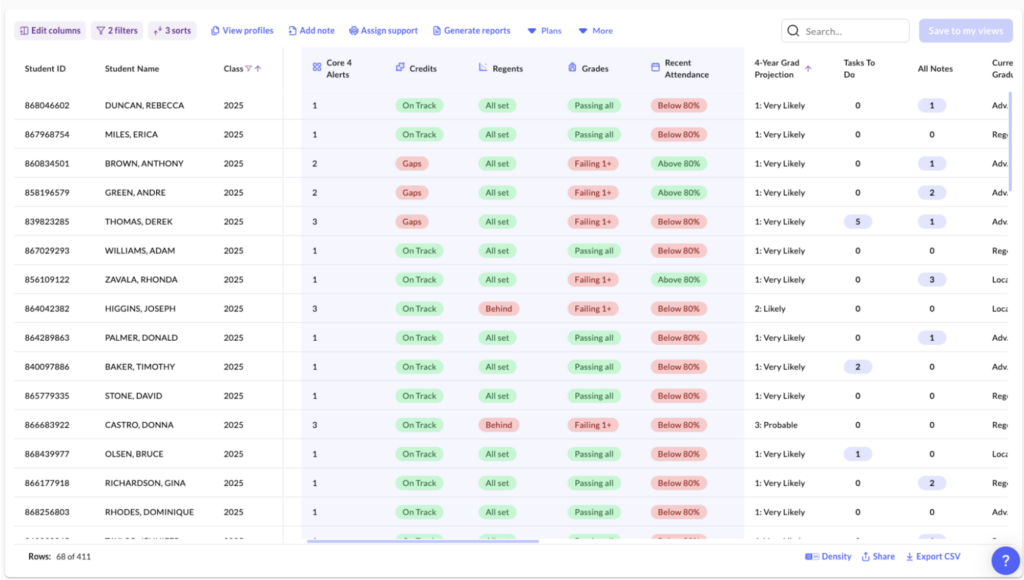
To strengthen transition planning, LUSD used on-track reporting systems to review final student progress data, identify students needing additional support, and coordinate planning across teams before the school year ended. Educators and student success teams reviewed patterns in course performance, academic progress, and intervention history to determine which students required continued monitoring or support moving forward.
Impact
By using end-of-year student progress data to guide transition planning, LUSD improved teams’ ability to identify ongoing support needs and reduce the likelihood of students quietly falling behind between school years. This created a more proactive and coordinated approach to student transitions.
Strategy Fit
Consider this strategy if your district has:
- Difficulty identifying students needing continued support before the next school year
- Limited visibility into final student progress trends
- Inconsistent transition planning processes across schools or teams
- Challenges coordinating summer support planning
- Students falling off track during school year transitions
Roadmap
- Identify which student indicators should guide transition planning
- Create recurring end-of-year student review processes
- Align on-track reporting systems to summer and transition planning workflows
- Identify students requiring continued monitoring or support
- Coordinate planning across educators, counselors, and student success teams
- Refine transition processes based on student outcomes and team feedback
Learn more about this district’s approach to student success in the District-Led Innovation Showcase report.