Case Studies
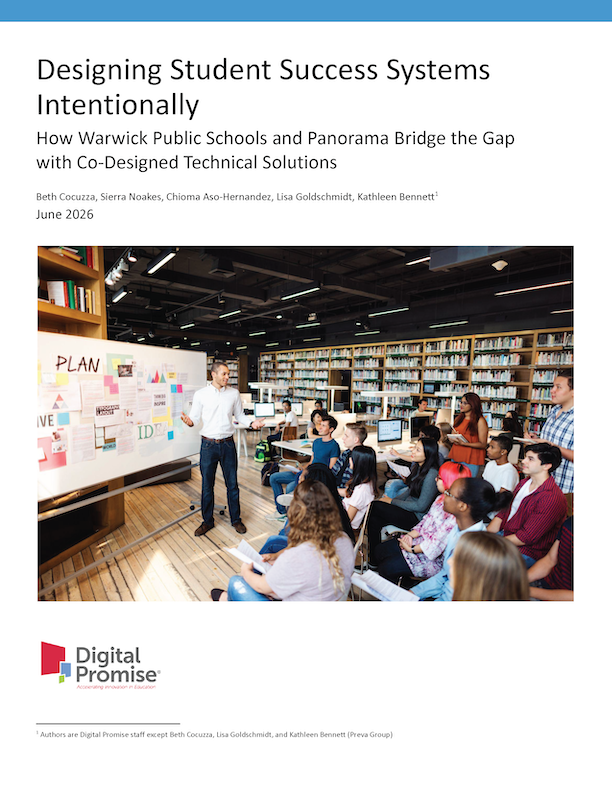
Designing Student Success Systems Intentionally
This case study examines the collaborative co-design partnership between Warwick Public Schools and Panorama Education to develop more responsive, scalable student success solutions. Recognizing that traditional edtech often fails to align with the unique workflows of educators, the project utilized user-centered design principles to bridge the gap between technological potential and daily classroom practice. By prioritizing equity of voice and shared values, district and vendor teams transformed their relationship from a standard vendor-client transaction into a deep, data-driven partnership focused on actionable insights.

From Fragmented Data to Actionable Insights
This report chronicles the rapid-cycle co-design partnership between Chicago International Charter Schools (CICS) and Innovare, aimed at dismantling data silos to better support freshman success. The collaboration replaced fragmented, time-intensive workflows with a unified On-Track dashboard and an AI-assisted intervention planner, demonstrating how technology can streamline administrative tasks while preserving essential educator judgment. By fostering a high-trust environment, the teams successfully aligned technical infrastructure with research-based school practices, transforming the typical vendor relationship into a responsive, co-designed ecosystem. This case study offers a blueprint for leaders to move beyond simple automation, ensuring that AI-enabled tools actively amplify educator expertise and foster sustainable, data-driven student success.
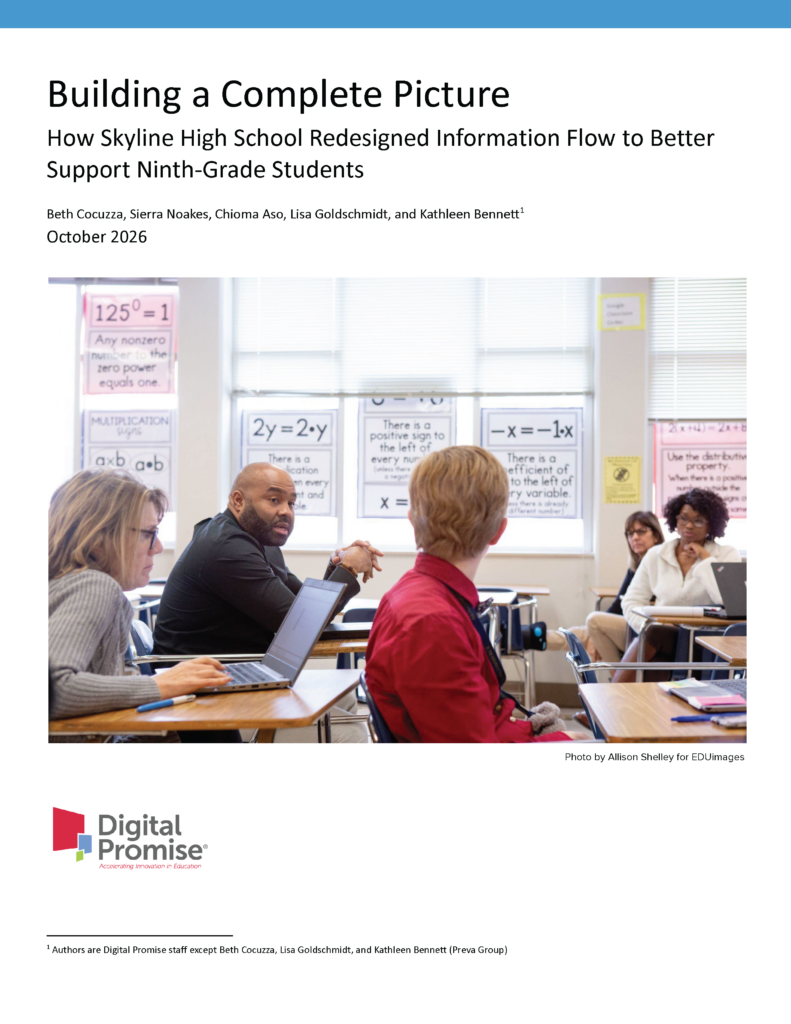
Building a Complete Picture
This report chronicles Skyline High School’s participation in a cross-district co-design initiative facilitated by Digital Promise, aimed at strengthening information-sharing and intervention workflows for ninth-grade students. Facing fragmented data, inconsistent system permissions, and disconnected tracking tools, Skyline developed practical, school-led solutions to strengthen communication and coordination among key support staff. These workflows demonstrate how strong human infrastructure can strengthen coordination and enable earlier intervention even when existing technology does not fully support educators’ needs, while surfacing broader challenges related to system configuration, governance, and ownership that school staff could not resolve alone. This case study offers a blueprint for leaders to move beyond reliance on individual workarounds, demonstrating how local innovation can illuminate systemic needs and how shared ownership among schools, districts, technology providers, and technical assistance partners can create more sustainable student success systems.
