During School Year

Identify At-Risk Students
Before diving into the processes involved in Identify At-Risk Students, we encourage your team to ensure your technical infrastructure is ready for this effort. In the case where you aren’t sure, this checklist will generate a set of questions you can ask the district or provider for clarity. In the case where you know the system(s) cannot do something, this checklist offers considerations for building workaround solutions.
Examples in Practice
These real-world spotlights showcase how existing products have created the technical infrastructure to identify at-risk students and highlight how districts created innovative in-house approaches to address their needs. The spotlights here include how districts have set up integrated systems that use predictive and well-being indicators to trigger immediate, coordinated interventions. Explore these roadmaps to support student success teams implement similar solutions:
Visual Dashboards to Identify At-Risk Students: How Solara Allows District Leaders to Customize Early Warning Indicators to Align with Specific Goals

Data in Context: Innovare’s AI Feature Provides Insight into Student Progress
Real Time Well-being Alerts: Sown to Grow Helps Educators Find Silently Struggling Students
Holistic Risk Identification: D11’s Integrated System Combines Predictive and Well-being Indicators to Trigger Immediate, Coordinated Interventions
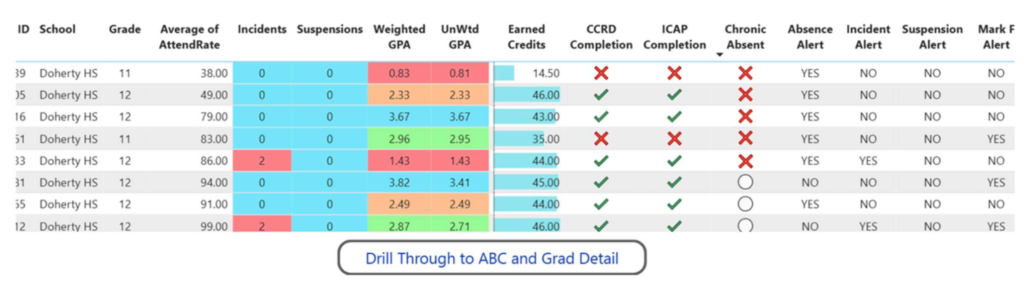
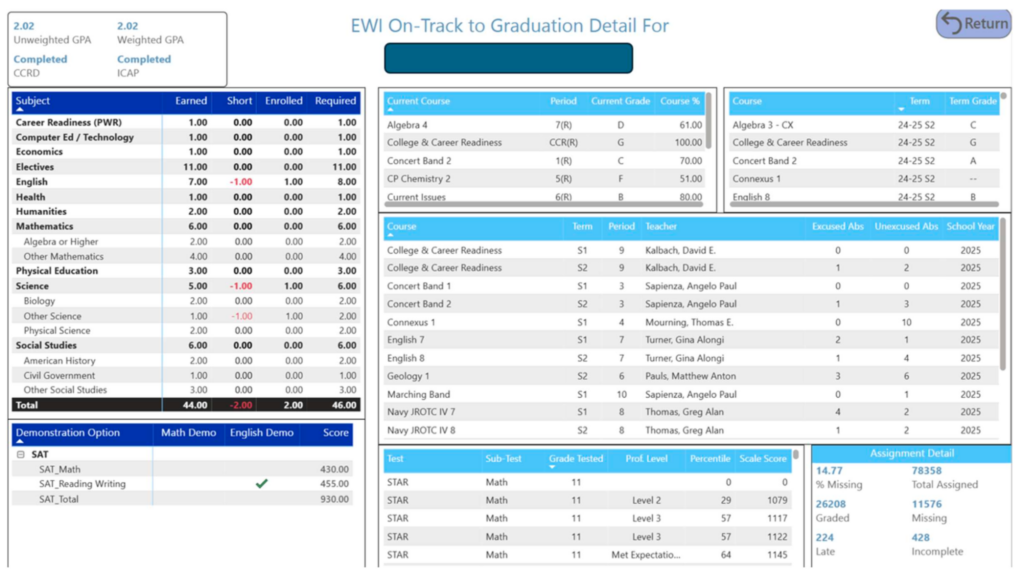
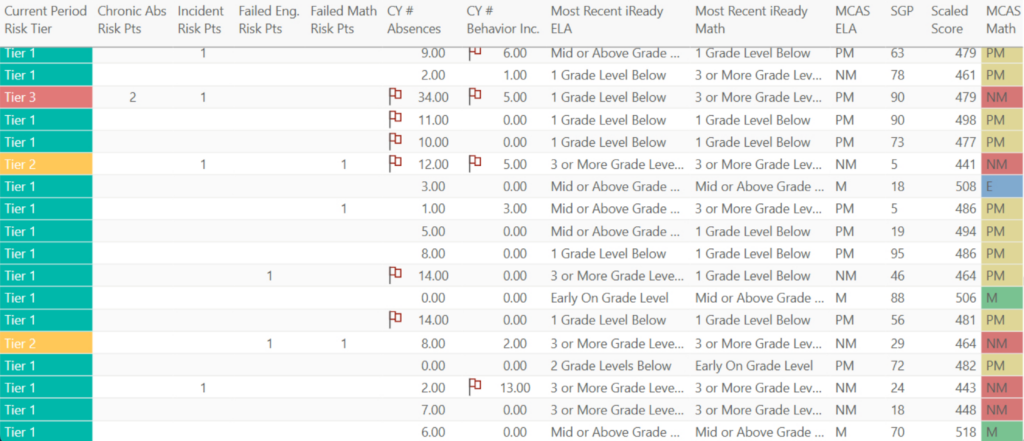
Evidence-Based Tiers: Lowell’s Nightly-Updated Dashboards Ensure Timely, Tailored Support for Emerging At-Risk Students
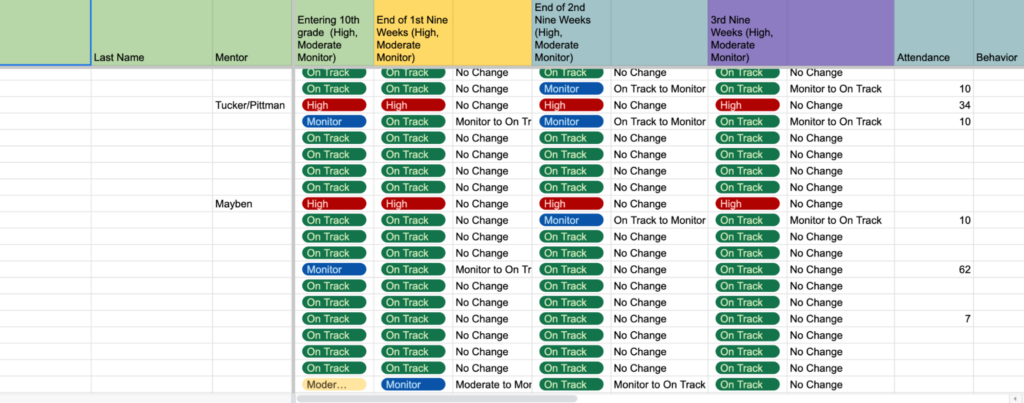
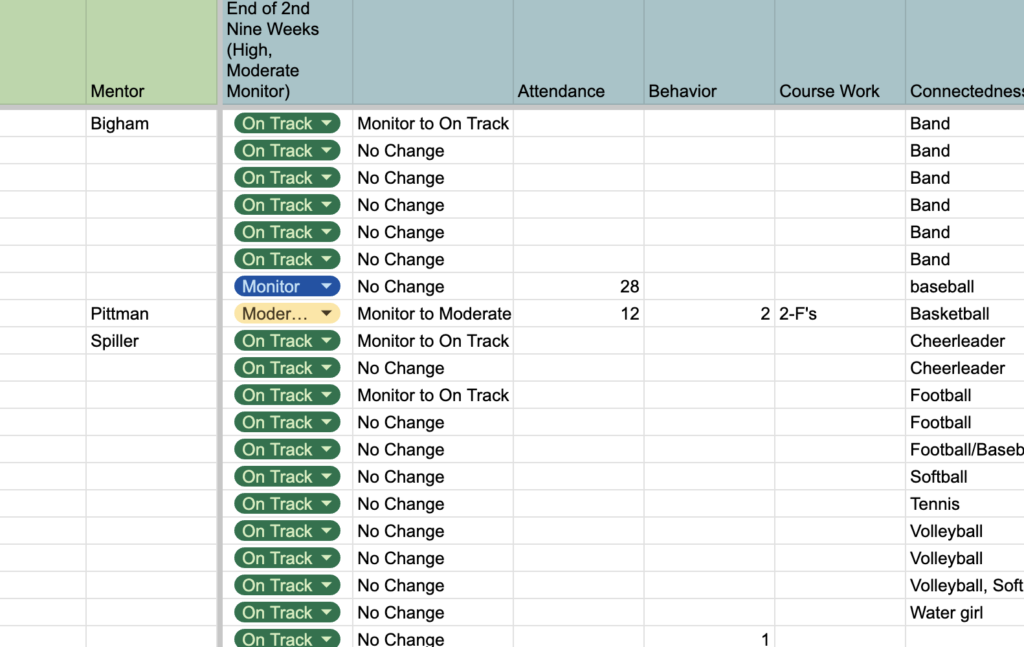
Low-Tech, High-Impact Accountability: Demopolis’ Google Sheets System Pairs Predictive Indicator Data with Mentorship Tracking for Coordinated, Relationship-Based Intervention